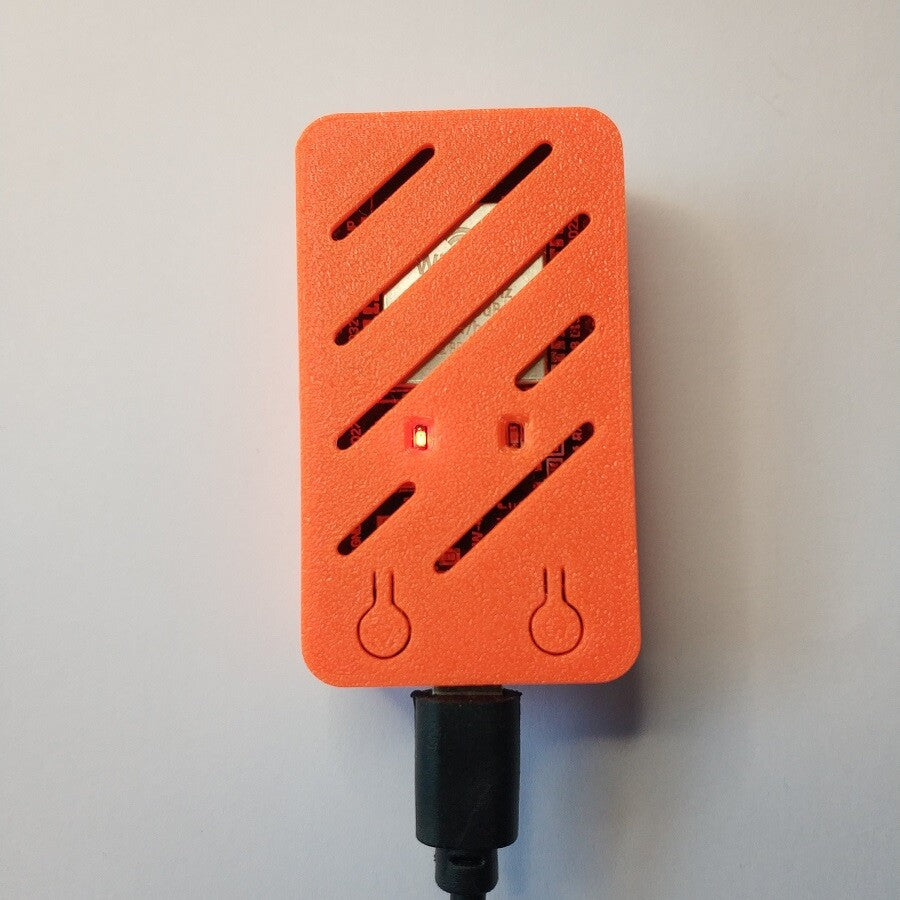
Personally, I utterly love these little guys. The board supports various programming languages such as Lua, Arduino, and MicroPython, making it a versatile choice for beginners and experienced developers alike. I find them incredibly easy to develop for via vscode and the PlatformIO plugin... which allows me to develop against it as if it's an Arduino 😀. You can also use the Arduino IDE if preferred. See the links below, or search Google for main more!
The ESP32 DevKit V1 development boards (aka ESP32-NodeMCU) are perfect tools for your Internet of Things (IoT) and electronics projects. These boards are brand new and make a great addition to your electronics toolkit. With this, you can build a wide range of IoT projects, including home automation systems, smart appliances, and more.
These boards feature the ESP32 microcontroller, a Wi-Fi and Bluetooth-enabled chip that makes it easy to connect your devices to the internet. The board also includes a USB interface for easy programming and a 3.3V power supply.
Don't miss out on this opportunity to add the ESP32 DevKit V1 to your electronics toolkit.
Features:
- ESP32 microcontroller with Wi-Fi and Bluetooth capabilities
- USB interface for easy programming
- 3.3V power supply
- Supports programming languages such as Lua, Arduino, and MicroPython
- Brand new
Note: you will need a Micro USB cable (not included) to connect this to your computer.
Drivers
This board uses the CH9102X serial port chip. I believe Windows 10 and 11 should automatically detect it, but if not, search for "CH9102 driver". On my Windows PC it automatically pops up in Device Manager as a USB-Enhanced-SERIAL CH9102 COM Port. Drivers are also available at this link:
- https://meshtastic.org/docs/getting-started/serial-drivers/esp32
Links
- Tutorial on using the Arduino IDE to connect to an ESP32:
https://lastminuteengineers.com/esp32-arduino-ide-tutorial/?utm_content=cmp-true
- Video Tutorial to set up vscode with PlatformIO for an ESP32:
https://www.youtube.com/watch?v=5edPOlQQKmo
- Tutorial to make the onboard LED blink via PlatformIO:
https://c2plabs.com/blog/2021/12/31/esp32-led-blink-tutorial-using-esp-idf-freertos-framework/
Additional Advice
Do not hook these to any external power supply whilst simultaneously connected into your computer. Disconnect from your computer before applying any external power.
Tell me more about the cases:
If you'd like to order these cases without an ESP32, please check out my other listing 😀:
- https://www.ebay.co.uk/itm/195665750017
I love me a good case, and these are gorgeous! They are 3D printed in "Eco-PETG", with external measurements of 54.5 x 31.5. The ChunkyBoy is 18.6mm high, and the SlimJim is 7.7mm (not including how much the pins stick out from the bottom of the SlimJim).
They feature:
- Snap-fit with a fingernail notch to pop it open once shut.
- A pair of button sections, giving you a nice clicky-feel press of the buttons on the board underneath.
- An "almost sparkly" finish to the top and bottom surfaces, which looks brilliant in my humble opinion.
- On the ChunkyBoy case: Notch to slide in a tool (like a precision screwdriver) to pop the board out without tugging the surface-mounted components.
- Vents to help keep the ESP32 cool.
- LED holes to see the power LED and onboard LED (available on GPIO2).
Note that on the ChunkyBoy case, the pins are not available directly through the base or top of the case.
I used this model as a start point for the case and reworked it to add in some improvements:
https://www.printables.com/model/50035-esp32-devkit-v1-chunky-case
What's this "Radioactive Orange"?
I've got some Eco-PETG which I'm calling Radioactive Orange , as it is soooo bright it's hard to even take a picture of! I love it! The pictures appear more of a redish colour, but I can assure you that it is a very very orange shade of orange, and most definitely not red. Think... the most orange you've ever seen. Think... neon-orange. I've added a picture from the store I bought the Eco-PETG from, but I don't think even that shows just how orange this is! :). The material used for Radioactive Orange is Eco-PETG which claims "The environmentally friendly PETG material is non-toxic", so hopefully it's a little better for the planet too :).
Who is the seller?
I'm a hobbyist who likes to keep many of the same items in stock here in the UK (running out of something when you need it is a total pain, right?). So I figure I can help out with the UK community by selling my surplus!
Are the parts new?
Yup! These parts are new, sealed and unused. I keep the one opened for the photo for my own use!
The cases are freshly manufactured by me (I keep a number pre-printed, so they don't delay shipping).
😀